Admin
Today, companies work with many external parties such as vendors, freelancers, suppliers, consultants, and business partners. While these relationships help businesses grow, they can also create risks if the background of these parties is not properly checked. This is where Vendor Verification and Corporate Due Diligence become important.
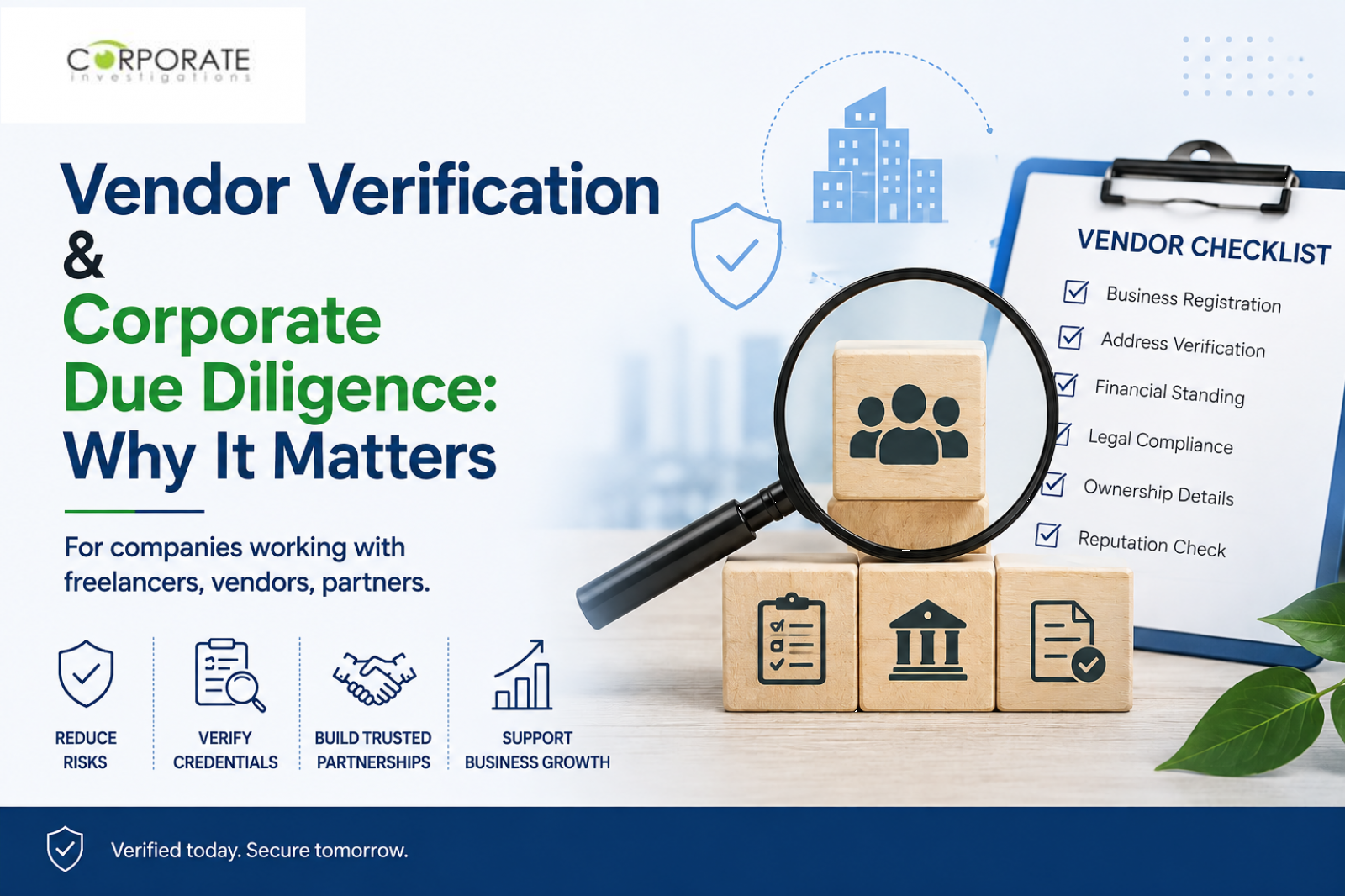
Vendor verification helps a company confirm whether a vendor or business partner is genuine and trustworthy. Basic checks can include company registration, address verification, ownership details, financial information, GST details, and other relevant records. These checks help identify false information, inactive companies, or potential risks before starting a business relationship.
Corporate due diligence goes a step further. It helps companies understand the background, reputation, ownership, and business history of an organization. It can also help identify legal issues, financial concerns, conflicts of interest, or other warning signs.
Proper verification protects businesses from fraud, financial loss, reputational damage, and compliance problems. It also helps companies make better and more informed business decisions.
In a competitive business environment, trust is important, but trust should also be supported by facts. Conducting verification and due diligence before onboarding a vendor or partner can reduce risks and build stronger, safer business relationships.
In short, knowing who you are doing business with is not just a good practice—it is an important part of responsible business growth.

 07 Sep, 2026
